

Q: Why are there small round holes and sawdust under my deck in late April?
A: Those signs mean carpenter bees, solitary wood boring bees, have emerged and are actively nesting. Early spring detection makes control and repair much easier, and it helps protect your deck from longer term structural damage.
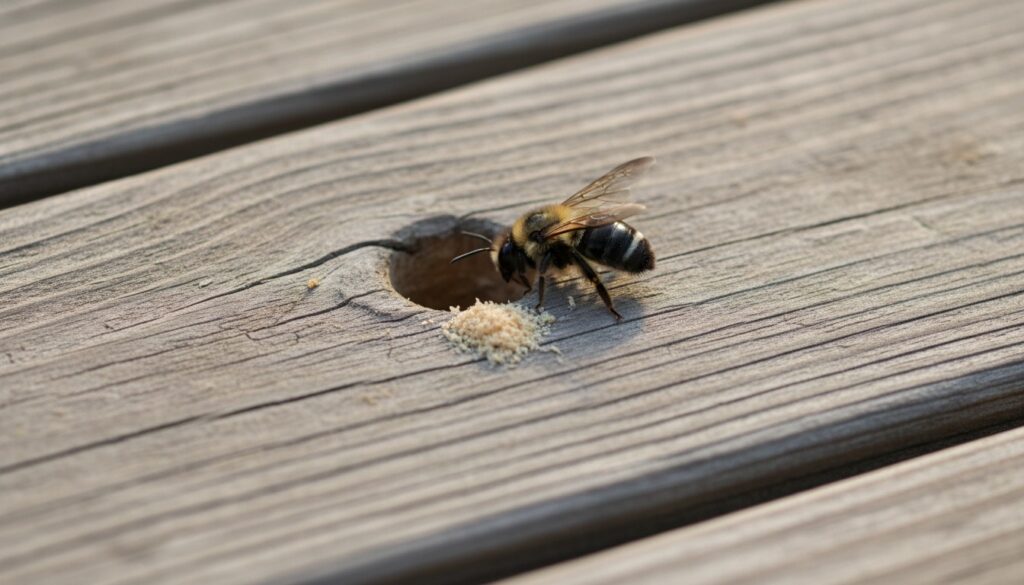
Table of Contents
- Introduction
- How to recognize carpenter bee holes, and why timing matters
- Carpenter bee biology and behavior in spring (male vs. female)
- What carpenter bee holes can do to your deck and other wood structures
- Practical prevention, DIY control and repair steps that follow extension and EPA guidance
- When to call a pro, family safety and environmental considerations

Introduction
It’s late April. You look under the deck and see neat, circular holes in the boards, with tiny piles of fine sawdust below them. The sight is more than an eyesore. Those openings are the first clue of a seasonal wood boring visitor.
Carpenter bees chew galleries in solid wood to raise their young. One season’s worth of holes is mostly cosmetic, but come back year after year and those tunnels can weaken railings, steps and fascia. Extension services and the USDA document this pattern, so catching activity early often saves time and repair money.
How to recognize carpenter bee holes, and why timing matters
Look for tidy, round entrances about 3/8 to 1/2 inch across, roughly the size of a dime to a quarter. They’re usually at or near the surface of untreated or weathered wood. Fresh frass, that fine powdery sawdust beneath a hole, and sharp, clean edges around the opening tell you the nesting is fresh.
Wind, rot or animals don’t leave that same combo of powder and crisp holes. In many temperate areas adults chew their way out in late April through May, so check your deck after a warm spell in early spring. That’s when you’ll usually notice activity while it’s still small and easier to deal with.
Carpenter bee biology and behavior in spring (male vs. female)
Carpenter bees spend winter tucked inside tunnels, then emerge as temperatures rise to mate. Females do the boring, building galleries where they lay eggs and store pollen. Males are territorial and often hover around nesting sites, acting bossy and loud, but males cannot sting. Females have a sting and will use it if handled or trapped, so treat nesting areas with caution.
If someone in your household has a history of severe reactions to stings, follow CDC guidance on insect stings and consider professional removal.
What carpenter bee holes can do to your deck and other wood structures
One season of holes usually looks like nuisance damage. The real problem is reuse. Females will expand and reuse galleries over multiple seasons, and those channels lengthen along the grain. Softwoods such as pine, cedar, untreated fir or spruce, and exposed end grain at fascia, railings and stair stringers are common targets.
Left alone for two or three seasons, galleries can run several inches to a foot or more, and rain will wick into openings until a patch no longer holds. That invites rot and wood boring fungi, and suddenly a small repair becomes a full board or joist replacement. Early action keeps repairs small.
Practical prevention, DIY control and repair steps that follow extension and EPA guidance
The most reliable prevention is sealing exposed wood. Paint provides the best barrier, and a good stain or water resistant sealer also helps. Where practical, replace vulnerable boards with hardwood or pressure treated lumber.
For active infestations, extension services recommend targeted treatments applied directly into galleries. Use insecticidal dusts labeled for carpenter bees, and apply with a bulb duster or similar applicator. Follow the product label for safety and timing. Wear basic personal protective equipment, such as nitrile gloves, eye protection, and a dust mask or respirator as the label directs.
Inspect in late April for fresh frass, treat active holes, wait several days for activity to stop, and then plug the holes with wood putty or a hardwood dowel before repainting. Do not seal holes while bees are still inside, because that traps live insects and can make the problem worse.
A few practical notes most people miss: treat only the active holes, keep treated boards dry while paint or filler cures, and check adjacent boards for fresh frass. Carpenter bees prefer exposed, weathered wood, so simple upkeep goes a long way.
When to call a pro, family safety and environmental considerations
Call a licensed pest professional or carpenter if you have heavy, repeated infestation across multiple structural members, visible structural weakening, nests in high or hard to reach places, or household members with serious bee allergies. Ask contractors how much experience they have specifically with carpenter bees, whether they follow state extension and USDA recommendations, and whether they will follow EPA registered label directions. Verify licensing and insurance so you are covered if repair work is needed.
Good contractors work within an integrated pest management framework, combining exclusion, targeted treatments and carpentry to remove long term risk. They can also coordinate structural repairs when galleries have compromised a board or joist.
Carpenter bees are valuable pollinators, so avoid indiscriminate killing. Focus on exclusion, regular maintenance and judicious control to protect both your home and beneficial insects. When you contact a contractor, ask for a written scope and documentation that labels and state rules will be followed. Keep a record of damage and repairs for future reference.
When you check your deck this spring, treat fresh frass and crisp hole edges as a call to action, not a minor annoyance. Timely inspections in late April, straightforward protective steps, and respectful treatment of pollinators will keep your deck sound and your family safe. For related home safety topics, see our deck maintenance and family safety guides on StaySafe.org.