

How do I stop bed bugs from hitching a ride home after winter travel?
Spend five minutes on a quick room check when you arrive, keep luggage on hard surfaces away from beds and walls, photograph any suspicious signs, and treat clothes and soft items with heat at home wash and dry on the hottest settings the fabric allows.

You nudge open a hotel door, the chill from outdoors clinging to your boots, salt crusting the suitcase wheels. You plop the bag on the bed, unzip, and that brief, tired pause is exactly when a hitchhiker can cross from room to home. Bed bugs don’t take a winter vacation; they ride year‑round on luggage and clothing. Hotels, lodges and inns stay warm inside, and that’s all they need.
A short arrival check buys a lot of calm and it’s cheaper than the headache of an infestation. Think of it as a tiny travel ritual: five minutes now, and you may save weeks of stress, professional treatment bills, and a lot of itchy nights.
Why winter travel doesn’t stop bed bugs, and why you should care
Bed bugs are indoor specialists. Cold weather outside doesn’t reach them in heated buildings, where they hide in seams, crevices and luggage fabrics waiting for a ride. So a ski lodge or a holiday stay is no safer by default than a summer motel.
The fallout is practical and personal. Treatments can run from a few hundred to thousands of dollars. Sleep suffers. Family members end up with itchy bites. University extension research shows bed bugs can survive months without a feed under the right indoor conditions, so one small transfer can settle into a long problem. Public‑health groups and pest professionals also report the toll on people’s mental well‑being worry and the constant checking that follows an infestation are real.
There is good news: heat works. Consistent temperatures above roughly 120°F kill bed bugs and their eggs, which is why a hot dryer is one of the most reliable DIY tools. Pair that with a quick inspection and a simple unpacking routine, and you’ve got a sensible defense.
First 5 minutes in the room
When you step into a room, immediately set bags on hard surfaces use a metal luggage rack, a desk, or the bathroom tile. Hard surfaces cut down the contact points where a bug can crawl from furniture into your suitcase. Keep bags a few feet from walls so they don’t brush baseboards, headboards or seams.
Make the bathroom your temporary buffer: shoes and toiletry pouches belong on the tile, and wet or snowy boots can go in a sealed plastic bag while you scan the room. Turn on a flashlight or your phone light and cast it along mattress seams and furniture joints; those tiny dark flecks and shed skins show up better under angled light. If you have a foldable luggage stand, use it its metal slats are less inviting to stowaways than upholstery.
Move deliberately. Close suitcases on the rack, store smaller bags in the bathroom, and only open what you need after the check. That way you avoid carrying anything unknown through halls or into other rooms.
In‑room inspection
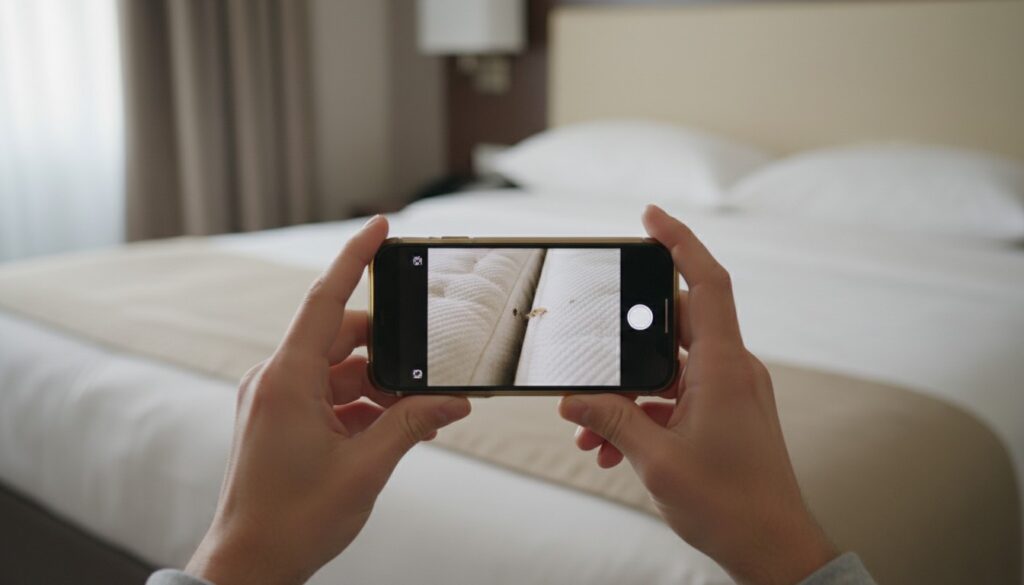
Start at the bed. Peel back the sheets and look at mattress seams, tufts, manufacturer tags and where the headboard meets the wall. Adult bed bugs are about the size of an apple seed and leave clues: tiny dark fecal spots, shed skins, rust‑colored smears and, sometimes, the bugs themselves tucked into stitching or crevices. Use a flashlight and run a credit card or another flat tool along seams to dislodge anything hiding there.
Then widen the sweep. Open nightstand drawers, lift lamp shades, peer behind picture frames and check furniture seams in chairs and sofas. Scan baseboards and carpet edges. Bed bugs follow wires and bed frame joints, so look behind the headboard and around outlets. If you see suspicious specks, lift them with clear tape and take a close photo for documentation.
If you find nothing, keep using your buffer zone and don’t unpack. If you find signs, don’t move your luggage to another room moving items spreads the problem. Keep suitcases closed on tile, photograph the evidence and speak with staff.
If you find signs of bed bugs at the hotel
It’s unsettling, but stay methodical. Move your luggage still closed onto the bathroom tile, snap clear photos of mattress seams and any live bugs, and don’t transfer items to other rooms or surfaces. Bring the pictures to the front desk and ask to speak with a manager. Request a documented inspection and insist on a room change that is not adjacent to the affected unit.
Ask that your luggage be handled in sealed bags or containers while the room is inspected; don’t let housekeeping move items around without sealing. Insist the replacement room is in a different part of the building or a different building and ask whether a licensed pest professional will conduct the inspection or treatment. Reputable properties will take the room out of service and bring in experts.
If staff downplays the evidence or refuses reasonable accommodation, consider checking out and finding other lodging. Keep receipts, correspondence and your photos those records help if you later seek reimbursement for any professional treatments.
Bringing your luggage and clothes home safely: unpacking routines and treatments that work
Back home, keep luggage in an entryway, garage or on tile never in bedrooms or living areas until you’ve cleared things. Treat clothes and fabrics first: wash everything that can be washed on the hottest cycle safe for the fabric and then dry on high for at least 30 minutes. That heat kills both bugs and eggs.
For non‑washables delicate hats, certain luggage inserts use a dryer if the material allows, or seal items and consider professional treatment if you suspect contamination. For suitcases, vacuum all seams, pockets and crevices; empty the vacuum into a sealed bag and put it in an outdoor trash can so anything you picked up doesn’t come back inside. Wipe hard‑shell cases with a damp cloth and mild cleaner, then store luggage in sealed plastic bins or bags between trips.
A simple routine: keep bags closed on tile, strip and bag clothes immediately, wash and dry on hot, vacuum the luggage and isolated items, then monitor for two weeks. If you see bites or signs later, call a licensed pest control professional promptly early action limits spread.
Travel‑smart gear and habits to reduce risk on winter trips
Small gear choices speed inspections and lower risk. Prefer hard‑shell suitcases when possible; use zip‑top bags for clothing; pack a small flashlight and a foldable luggage stand. If you already own one, a travel steamer helps steam treats seams without chemicals.
Build a few habits so checks become automatic: scan a new room on arrival, keep bags on a rack or tile until you’ve inspected the bed and headboard, and don’t put boots or coats on sleeping surfaces. For longer stays, affordable monitoring tools like interceptor strips under bed legs can help. Keep each traveler’s clothes in separate sealed bags to reduce cross‑contamination.
Before you go, make a quick checklist in your head: pack zip‑top bags, add a flashlight and a foldable rack, plan to launder on return and, if you’re traveling over a busy holiday weekend, check the hotel’s pest policy. When you get home, run the unpack routine without delay those small habits protect your house, preserve sleep and spare your family the slow frustration of a bed bug problem.
Related resources
For more on laundering and fabric care after travel, see our guide on laundry and fabric care. For broader household safety during winter trips, including storm preparedness and family safety, see our winter safety resources.
The CDC, EPA, the National Pest Management Association and university extension services all point to heat‑based treatment and early detection as the most reliable steps homeowners can take after travel. Keep a few of these routines in your travel kit and you’ll greatly reduce the chance of bringing anything home.