

Q: Why are yellowjackets more aggressive at the end of summer?
A: Colonies swell in late summer and workers shift from feeding larvae to hunting quick sugars. You’ll see many more wasps foraging around food, often hundreds to a few thousand workers, which raises the chance of encounters at picnics, grills, and trash.
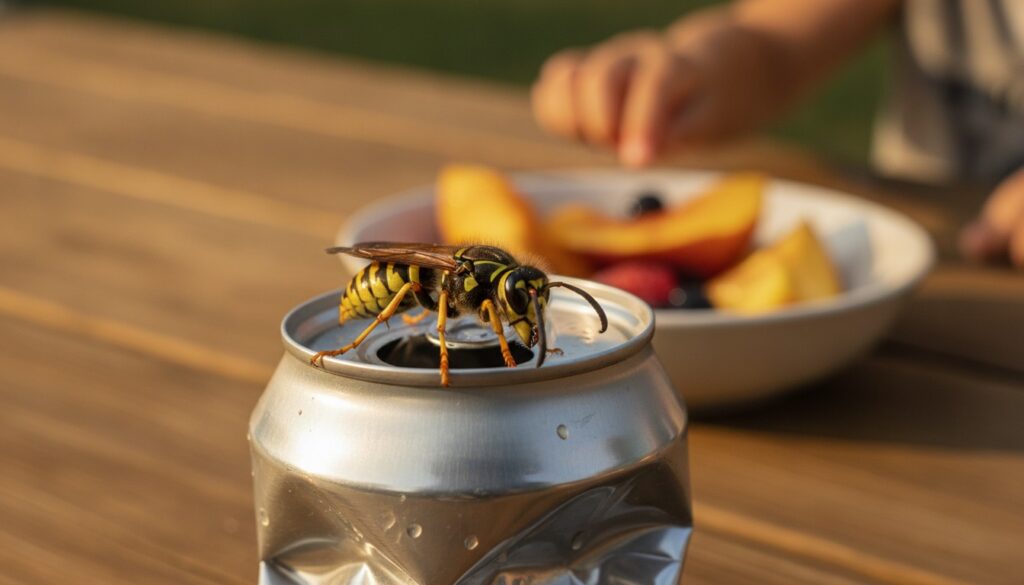
Picture a backyard barbecue in late August: kids with sticky fingers, the fizz from a soda can, the hot metal of the grill, and a pair of yellowjackets that suddenly multiply into a buzzing cloud around the dessert. One wasp checks a drink, then another, and within minutes every plate of fruit and every slice of cake feels like it has a target on it. What started as a relaxed afternoon becomes a hurried sweep of children and pets indoors. It’s familiar in neighborhoods from coast to coast.
Here’s why they get so noticeable now, where you’re most likely to run into them on your property, how to stop attracting them, what to do if they swarm, and when to call a pro. The tips below come from extension experts, CDC and EPA guidance, and pest management practices you can use without becoming a full-time wasp hunter.
Why yellowjackets change behavior in late summer
Colonies grow through the summer, peaking by late summer and early fall. Extension experts at Penn State, the University of Minnesota, and UC IPM note that nests host far more workers at that point, and the colony is switching gears, producing new queens and males. Workers that spent early summer hunting protein for larvae still bring back meat, but they also start hunting quick sugars for energy.
That sugar shift sends them into human food sources: soft drinks, ripe fruit, desserts. Your picnic ends up looking like a cafeteria. More wasps also means more competition. Small disturbances around food or the nest can lead to brief bursts of aggression. Toss a soccer ball near a low mound, or a child leans on a siding gap, and the nest can react. Our seasonal safety survey at StaySafe.org lines up with what extension folks see, late August is when activity spikes.
Where you’ll meet them
Yellowjackets follow calories and convenience. Look where food and moisture collect. Grills, picnic tables, fruit trees with fallen fruit, and open drink cans are top magnets. Let a plate sit between grilling rounds or leave a soda uncovered and you have a quick buffet. Fallen, overripe fruit under trees is one of the biggest things homeowners miss.
Trash, compost, and pet food matter just as much. Loose-lidded trash cans, open compost piles with fruit scraps, pet bowls left outside, and uncovered rain barrels or birdbaths give both food and water.
Nests hide close to people: ground cavities and old rodent burrows, wall voids, attics, eaves, and porch undersides all shelter colonies until foraging peaks. Imagine a thin line of wasps trailing from a compost bin into a siding gap, or a child brushing a low mound, those are the typical encounters.
Practical prevention
You don’t have to wage war on wasps to cut encounters. Start with food and drinks: keep dishes covered, use lidded drink containers or straws for kids, and clean spills promptly so sugary residues do not become an evening snack. When you host, set up one monitored food station 15 to 25 feet away from play areas. It’s easier to keep wasps away from kids if all the attractants are in a single spot.
Control of trash, compost, and pet food is as important as table habits. Use tight-fitting, lidded trash cans and store them away from seating areas. Keep compost bins sealed or locate them well away from patios. Bring pet food indoors when not in use. Structural fixes help too: pick up fallen fruit, repair torn screens, seal gaps in siding, and trim plants away from doors so nests aren’t hidden near entry points. These simple sanitation and exclusion steps are low cost and effective, and they also reduce other problems like moisture or rodent access.
what to do during yellowjacket encounters and swarming events
If a few yellowjackets investigate your soda can, resist swatting. Fast movements and flailing usually provoke them. Stay calm, cover faces, and move away slowly to a safe distance. Cover dishes, stop eating outdoors if wasps gather, and shepherd children and pets inside until activity drops. Those moves match CDC and extension advice: avoidance and a calm retreat are the best immediate responses.
If yellowjackets begin chasing people or a nest is clearly defensive, find shelter. Get into a house or vehicle and close doors and windows. When camping or hiking, store food and scented items in sealed containers and move well away before you resume a meal. Making a lot of noise or throwing things is not as safe as a steady retreat and getting into an enclosed space.
Treating stings and handling allergic reactions
Most stings are minor. Wash the area with soap and water, apply a cold pack for 10 to 15 minutes to reduce swelling and pain, and consider an over-the-counter pain reliever or an oral antihistamine for itching, following label directions. Yellowjackets do not leave barbed stingers behind like honeybees, so you’ll usually have nothing to pull out; still check for debris and watch the person for worsening symptoms. Pay close attention to children and pets, because swelling near the face or throat, or changes in breathing, need immediate attention.
Know the signs of a severe allergic reaction: difficulty breathing, widespread hives, swelling of the face or throat, dizziness, rapid pulse, or loss of consciousness. These require emergency services and epinephrine if an auto-injector is available. If someone with a known severe allergy is stung, give epinephrine and call 911 right away. Multiple stings, or stings near the airway, also deserve urgent medical evaluation even for people without known allergies. After any sting that seems more than minor, write down what happened and talk to your healthcare provider about follow-up and whether you need an allergy evaluation.
Nest removal, trapping, and when to call a professional
Deciding whether to handle a nest yourself or call pest control is a judgment that favors caution. University extension services recommend professional removal for large colonies, nests inside walls or attics, or any situation where people or pets are regularly nearby. Licensed technicians have protective gear, the right insecticides, and the experience to treat at night when workers are least active. Even for handy homeowners, after-dark treatments carry real risk, so professionals are the safer choice when nests support hundreds to a few thousand workers.
Trapping can reduce worker numbers late in the season when sugar baits are attractive, but traps must be placed so they do not draw wasps toward family areas. EPA and extension guidance suggests placing traps downwind and well away from patios and play zones, typically 25 to 50 feet from seating areas. When you hire pest control, ask for a licensed, insured company with yellowjacket experience, ask about night treatments and methods, request a written plan for post-treatment cleanup and repairs if the nest was inside a wall, and get any guarantees in writing. With professional treatment and modest changes to how you store food and manage waste, late-season yellowjacket trouble often becomes a one-time problem rather than an ongoing nuisance.