

Do termites die or go dormant in winter?
No. Termites stay active year-round wherever they find warmth and moisture, including heated homes, basements, and soil below the frost line, according to experts at the National Pest Management Association and the USDA Forest Service.
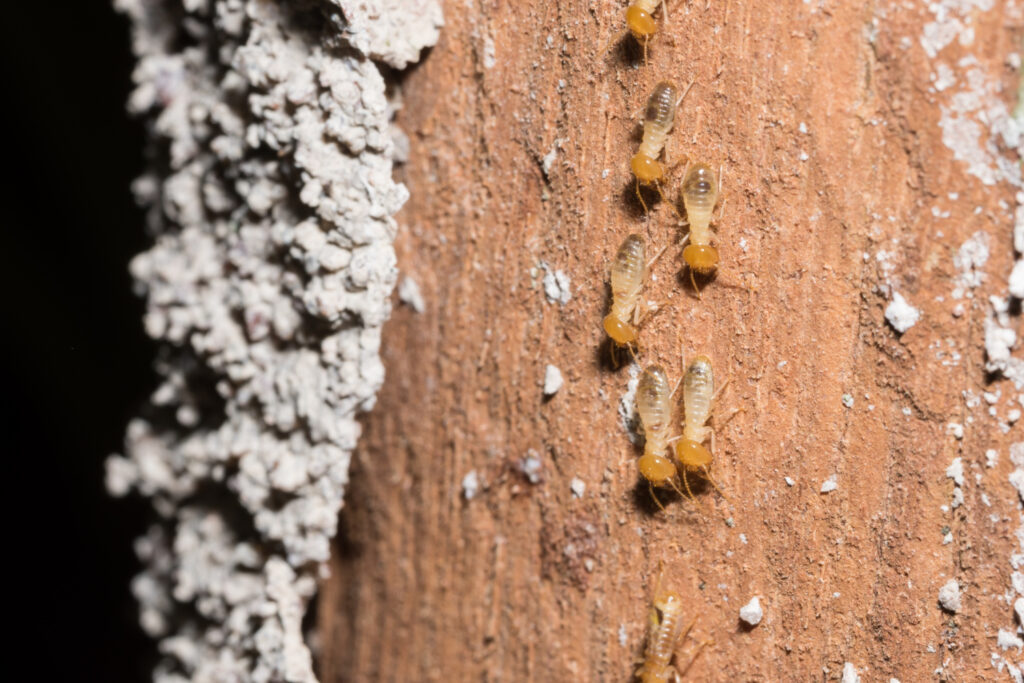

Introduction
The first hard frost settles, your fireplace is glowing, and you finally stop thinking about bugs. Winter feels like a pause button for pests, and you get that brief, cozy illusion that your home is off-limits to anything that crawls. You stack the firewood, hang the holiday lights, and assume the cold handles the rest. Nice thought. Not always true.
Termites don’t sleep through winter. They stay active under your yard, inside your crawlspace, or even behind warm drywall, quietly chewing while you sip cocoa. The National Pest Management Association estimates termites cause more than 5 billion dollars in property damage each year in the United States, and cold weather doesn’t grant your home immunity. Indoor heat and moisture can turn a house into a winter refuge for a colony, a pattern the USDA Forest Service has long noted in building science guidance. Many homeowners ask if winter termite activity is normal. It is when structures supply heat and humidity.
In this guide, you’ll see why termites keep moving when temperatures drop, where they hide in winter microclimates, how different species behave, the cold-season clues to watch for, and which maintenance steps and professional treatments still work in January. Smart building choices, from flashing to inspection-friendly details, also make a difference. That’s when quick winter inspections catch issues early long before spring.
Winter Doesn’t Turn Termites Off
On paper, termites should slow down when the weather turns. They’re cold-blooded, so activity follows temperature. They don’t hibernate like bears though. Give them warmth and moisture and they’ll keep foraging, feeding, and rebuilding more of a winter jog than a summer sprint. University extensions and NPMA agree: colonies keep working whenever conditions are stable.
Subterranean termites, the most common across much of the country, have a built-in winter plan. They retreat below the frost line where soil temperatures hold steady, then use protected routes to re-enter heated structures. Soil warms with depth. By 3 to 4 feet down, many regions sit near the annual average, often in the 50s Fahrenheit, a pattern reflected in NOAA climate normals and USDA Forest Service guidance. That’s plenty of warmth to keep a colony alive. A heated foundation or slab becomes a beacon. Foragers follow it back up.
It’s easy to underestimate how much the frost line varies. Along the Gulf Coast it’s often just a few inches. In parts of the Upper Midwest and New England, it can run 36 to 48 inches, according to state extension and transportation department references. Your lawn might be rock-hard in January, yet the soil under your footings can still be hospitable. As NPMA reminds homeowners, termites work around the clock, and the damage tally doesn’t pause for winter. One hard freeze doesn’t reset the risk when your house is leaking heat into the soil.
You can sometimes catch winter activity in plain sight. If pencil-width mud tubes creep up a basement wall in January and you open one to find creamy-white workers moving inside, that’s proof the first freeze didn’t shut them down.
Where Termites Stay Warm
Once you start thinking in microclimates, your home looks different. Crawlspaces, basements, slab edges, and foam insulation hold heat. Even a slow drip under a utility sink or along a foundation crack adds the moisture termites need to avoid drying out. Warmth plus damp creates pockets where a colony can ride out weeks of freezing weather while still nibbling on structural wood.
The frost line pushes colonies deeper, but your home’s heat draws them back. Water heaters, furnace rooms, radiant-heated slabs, and warm utility chases create gentle thermal corridors well into winter. A few feet below grade, soil often sits near the annual average about 50 to 55 degrees Fahrenheit in many temperate regions. When foragers sense heat bleeding through concrete, they follow that gradient. USDA Forest Service bulletins describe this behavior again and again in termite management notes.
You see it outside in subtle ways. A south-facing foundation bed with thick mulch stays a bit warmer. Termites travel through the protected mulch layer and up a hairline crack in the stem wall. Inside, a leaking basement utility sink warms the air and dampens sill plates. Workers run discreet mud tubes behind fiberglass insulation where you rarely look. Radiant floors keep slab edges toasty, and termites trail expansion joints to reach baseboards that feel a little soft under paint. Pulling mulch back in winter helps with visibility and drying. For more on moisture control that prevents pests and mold, see our guide to winter home humidity and leak prevention on StaySafe.org.
Not All Termites Behave the Same
Match your expectations to your region and construction. Subterranean termites are the most widespread and destructive in the United States. They stay active year-round because soil shields them from extremes. If they reach your heated home even through a hairline gap at a slab edge they don’t need a warm day to keep feeding on joists, sill plates, or subflooring. University extensions and the USDA Forest Service consistently note that activity continues wherever temperature and humidity are stable.
Drywood termites play by different rules. They don’t need soil and live entirely inside the wood they eat. A heated coastal home or a warm South Florida condo can host slow, steady feeding in winter. You might even find shed wings by a window or lamp in a chilly month because indoor warmth and lighting sometimes trigger off-season swarming. Experts at the University of Kentucky, North Carolina State, Texas A&M, and the University of California Statewide IPM Program report that indoor activity continues when structures provide steady heat.
Dampwood termites prefer wet wood outdoors rotting logs, landscape timbers, or wood piles. In winter they shift deeper into protected, moist wood and stay localized unless the climate is mild or coastal. In maritime zones with cool, damp winters, that wood stack along the fence becomes a standing buffet. Not sure which species you’re seeing? Frass, mud tubes, and where the affected wood sits usually tell the story.
Winter Signs You Shouldn’t Ignore
Cold-season clues are quieter because outdoor activity slows and you’re indoors more. Look for moisture-plus-wood patterns. Mud tubes lacing up concrete or masonry. Blistered or rippled paint that hides hollowed wood. Bulging drywall seams in a warm corner. Baseboards that sound hollow when tapped. That musty edge in a closed basement room is a nudge to look closer.
Different termites leave different calling cards. Drywood frass looks like tiny, dry, sand-like pellets. If you vacuum what looks like sawdust in a sunny guest room in February and it returns, that’s likely frass being kicked out of a pinhole. Subterranean termites build pencil-thin, earth-and-saliva tubes from soil to wood, or along cracks, to maintain humidity while they travel. Termite-damaged wood often feels papery under paint because the outer layer stays intact while the inside turns into a honeycomb.
Wings can appear at odd times when heat and lights are right. A neat pile of identical, translucent wings on a windowsill suggests a small indoor swarming event. Don’t confuse ants and termites. Termites have straight antennae, a broad waist, and two pairs of equal-length wings. Ants have elbowed antennae, a pinched waist, and wings of different lengths. When in doubt, save a sample and send photos to your county extension office or a licensed pro for identification.
Your Winter Maintenance Checklist
Winter is prime time to get ahead of moisture, which sits at the center of nearly every termite story. Fix plumbing drips, even the tiny ones that leave a faint ring under a trap. Run bathroom and laundry fans to the exterior, not into the attic. Insulate cold-water pipes that sweat; wipe the condensation line on a January morning and you’ll see how fast it returns. Consider a dehumidifier to keep indoor relative humidity around 30 to 50 percent, a range the EPA recommends for healthy indoor air and one that reduces pest-friendly dampness. Simple leak alarms under sinks provide a low-cost early warning.
Landscape choices matter in January. Keep mulch no deeper than 2 to 3 inches and pull it 6 to 12 inches back from siding to expose the foundation. Maintain at least 6 inches of clearance between soil and any wood siding or trim, and keep 2 to 3 inches of bare, visible foundation so you can spot early tubes. Regrade low spots that funnel water to the house, and use downspout extensions to carry roof runoff 4 to 6 feet away an approach echoed in FEMA guidance on keeping water off foundations.
Wood-to-soil contact is an express lane for termites. Move firewood at least 20 feet from the house and store it about 5 inches off the ground on racks, not directly on soil. Use gravel or pavers under stacked lumber. When you replace fence posts or pergola bases, choose pressure-treated wood rated for ground contact look for AWPA UC4A or higher. This breaks the moisture-wicking path that draws termites up into dry wood. For safe firewood storage that avoids both pests and fire hazards, see StaySafe.org’s winter heating and firewood safety tips.
Finish with the places you rarely look. Clean gutters so meltwater doesn’t spill against the foundation. Seal utility penetrations cable, gas, and HVAC lines with appropriate sealant or escutcheon plates to shrink hidden entry points. In crawlspaces, keep vents open if your design is vented, or talk with a qualified contractor about encapsulation with a vapor barrier if moisture is chronic. USDA Forest Service publications and multiple university extensions consider that a best practice. If you have foam board insulation near grade, protect it with a cementitious coating or flashing, since termites exploit hidden foam channels.
Build-In Resilience Before Next Winter
Long-term resilience starts with materials and detailing. Choose pressure-treated lumber rated for its exposure per AWPA standards. Use poured concrete or masonry for ground-contact elements like porch piers and stair stringer bases. Where wood meets masonry, consider physical barriers that don’t wear out, such as stainless steel mesh or properly formed termite shields on piers. These aren’t force fields, but they make hidden routes harder and inspections easier. Building codes in termite-prone regions reference protection under the International Residential Code see IRC R318.
Design for visibility as much as style. Keep foundation walls exposed rather than burying them in soil or mulch. A narrow gravel border keeps the first few inches dry and visible so you can spot a pencil-thin tube before it becomes a wall-wide highway. If you’re re-siding or adding rigid foam, detail an inspection strip or use protective coverings at and below grade. Foam insulation below grade can conceal termite travel, and many termite-prone areas require shields or inspection zones by code.
Moisture control in the building envelope pays dividends in every season. Flash doorways and windows correctly. Add kick-out flashing where roofs meet walls so runoff doesn’t dig into siding corners. Route vents where they belong. Crawlspaces should be vented or encapsulated based on local code and building science, not habit. A well-executed vapor barrier keeps wood moisture content in the safe zone. University extension publications and the USDA Forest Service emphasize that integrated approaches construction choices, moisture management, and ongoing monitoring outperform any single silver bullet. For durability upgrades that also help in storm season, see our StaySafe.org guide to exterior water management and home weatherproofing.
Termites don’t sleep through winter. With smart design choices, steady maintenance, and timely professional help, your home won’t become their heated winter cabin.