

Q: How do I evacuate an older parent safely when a storm threatens?
Focus first on keeping medications and medical devices running, then arrange accessible transport and an appropriate shelter. Prepare a go bag and emergency paperwork ahead of time so you can move quickly and calmly when an evacuation order comes.
Prepare a photo of a packed evacuation bag with labeled medical items and store it on your phone and in the family cloud to reduce guessing during a rushed departure.
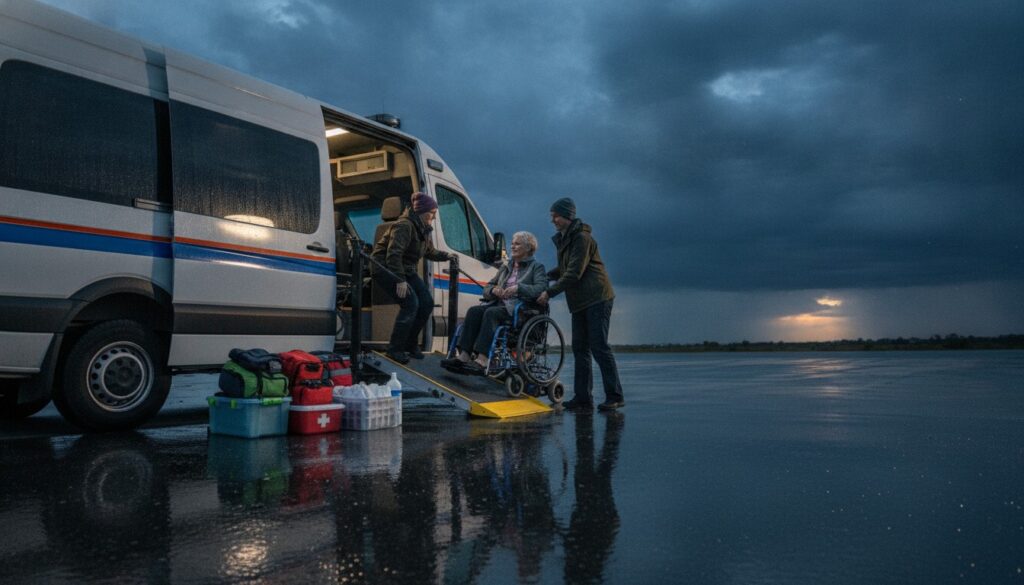
Table of Contents
Picture a late August sky the color of old pewter, wind that snaps a branch like a whip, and an emergency alert telling your county to evacuate now. You think of toiletries and snacks, and then of your older parent who moves slowly, needs a daily pill routine and a CPAP, and cannot easily climb into a car. That is the scene you want to avoid: missed medicines, a frantic hunt for a power outlet in a crowded shelter, last minute decisions that raise the risk.
A small trick I use: photograph an evacuation bag laid out on the kitchen table, with labeled medical items. Put that photo on your phone and in the family cloud. When helpers arrive, there is no guessing. They know what to grab.
Evacuations hit older adults differently because mobility limits, chronic illness and reliance on electricity combine to make leaving harder. A mobility aid adds minutes to every transfer, an insulin vial needs refrigeration, and a power outage can stop oxygen or infusion pumps. Social isolation or a lack of nearby caregivers turns a manageable storm into an emergency fast. Many families ask if local registries or the Red Cross will bridge that gap. They help, but only if you register ahead of time.
Read on for what to prioritize: the few medical and mobility details that matter most, how to arrange accessible transport and shelters, and the seasonal steps you can take now so an evacuation is faster, safer and less traumatic.
Why older parents face extra barriers during storm evacuations
Mobility limits are the first friction point when a storm forces you to move. Slow steps, trouble with stairs, balance problems and walkers or wheelchairs stretch a ten minute exit into a half hour operation. Every minute matters when floodwaters rise or winds strengthen.
Those assistive devices do not always fit into a sedan. Transferring someone from a rollator or power chair into a low roof car is awkward and risky without the right equipment or training. That is why arranging a ramp, a lift or an accessible van ahead of time removes the biggest delay.
Chronic conditions, cognitive change and tightly timed medication schedules create another set of problems. Missed doses or lost refrigeration for insulin is a medical risk. Cognitive impairment makes following crowds, remembering a destination or communicating needs at a shelter much harder. FEMA and AARP report older adults are disproportionately affected by disasters. Planning for mobility, medication and social support makes evacuations safer and more humane.
So before you worry about tarps and shutters, solve the medication continuity and power questions that determine whether an evacuation is survivable and dignified.
Keeping medications and medical equipment running through an evacuation
Medication continuity is the top logistics task. Keep an up to date printed medication list with drug names, doses, prescribing doctors and pharmacy numbers in an evacuation binder, and store a photo of that list on your phone. A laminated list cuts down questions at intake. Keep a refill buffer, ideally a rolling seven day supply for critical meds, and talk to prescribers and your pharmacist about emergency refills and early fills before storm season.
Power dependent devices need a backup plan you test now, not when sirens are sounding. If your parent uses a CPAP, BiPAP, oxygen concentrator, electric wheelchair or an infusion pump, learn each device’s wattage and voltage so you can match a battery pack or generator. Keep the manufacturer’s contact information handy and ask whether they offer emergency support or deliveries.
A few practical items that buy you time: portable oxygen cylinders for transport, spare condensate tubing for CPAPs, extra hearing aid batteries and a small uninterruptible power supply for devices that tolerate short surges. Know how long each backup will run and list that in your binder.
Do this today: keep both a paper and a digital medication list, pack at least 72 hours of meds for evacuation, and ask the pharmacist about state emergency refill rules. Before buying a generator or battery bank, match power requirements to the equipment. Never run generators indoors. Carbon monoxide is silent and deadly; place the unit outdoors, keep it dry and follow CDC guidance.
These preparations turn an overwhelming scramble into a set of checkable tasks you can complete ahead of the storm.
Getting older parents out safely and comfortably
Your family car is often the first thought, but it is not always the right tool when mobility devices and transfers are involved. Loading a heavy power chair into a trunk, wrestling a rollator into the back seat or lifting someone frail into a low roof sedan can cause injuries and slow you down.
If your parent is likely to fall or needs mechanical lifting, plan for a ramp, a lift or a high roof accessible vehicle that allows seated transfers. Practice the transfer with a physical therapist or trained caregiver. Small practice sessions reduce anxiety and speed the real thing.
Public and emergency transport options exist, but they only help if you call ahead. Paratransit, ADA accessible buses and volunteer driver programs are often coordinated through county emergency management or your Area Agency on Aging. Many places use a Special Needs or Functional Needs Registry to prioritize people for accessible pickups and sheltered beds. Registering gives you a spot in the plan so when evacuation orders start, the county can send the right vehicle instead of showing up with an ill fitting SUV.
Learn safe techniques like using a transfer board or a sling, ideally with professional guidance. Keep accessible transport phone numbers in the evacuation binder and post a clear note near the front door if you must leave quickly, so staff or neighbors know someone inside needs assistance. Check whether ambulance transport is covered by Medicare or local emergency plans and note those insurance details before you leave.
Shelter access, registries and how to use them
Not all shelters are created equal for medical, mobility or cognitive needs. General community shelters provide a safe roof but may lack refrigeration, nursing care or accommodations for power dependent devices. Special needs shelters and medical shelters offer a higher level of care, including refrigeration for insulin, oxygen setups and staff trained for chronic conditions.
Arriving at the wrong shelter usually means moving again or scrambling for a hotel. Confirm shelter capabilities in advance. Register with your county’s Special Needs or Functional Needs Registry and talk to emergency managers about what services will be available. These registries help officials prioritize transportation, direct you to appropriate sheltering and alert utility crews if someone depends on electrically powered equipment.
Pack photocopies of IDs, medication lists, medical orders and mobility device serial numbers, and carry a current photo of your parent to speed identification. Call shelters during calm weather to ask about refrigeration, generator backup, nursing staff and pet policies, so you are not surprised on arrival. If a medical shelter reservation is possible, ask for written confirmation. Most shelters accept photos and digital records, but bring paper backups in a waterproof pouch.
Practical evacuation planning and a seasonal checklist for older parents
Treat a seasonal evacuation plan like a home inspection for people. Check medications, test batteries and update contacts before storms are on the map.
Build a small evacuation binder with printed medication lists, copies of Medicare and insurance cards, advance directives, power of attorney papers and a current photo. Keep one copy in a go bag and another in a trusted family member’s cloud folder.
Assemble a go bag designed for older adults: a labeled weekly pill box with a seven day buffer, spare CPAP batteries and power cords, spare glasses and hearing aid batteries and a few comfort items to reduce anxiety. Include a waterproof pouch for documents.
Secure the house before you leave to avoid preventable damage and reduce post storm pests and mold, which become health concerns when you return. Unplug small appliances, secure outdoor furniture and close the main water valve if flooding is likely. After floods, expect increased rodent and insect activity; EPA guidance recommends waiting to reenter until authorities say it is safe and hiring a certified contractor for cleanup that goes beyond household limits.
Leave a visible note on the front door with your contact number and destination, turn on an exterior light if you will return at night and arrange for a neighbor or monitored camera to check the property. Set two calendar reminders during storm season: one to top off meds and batteries at the season’s start and another 48 hours before any forecasted storm to confirm transport and shelter reservations. These simple rituals make evacuation feel more like routine care and less like crisis management.
What to do during evacuation day and after you arrive at shelter or lodging
Evacuation day is about calm routines that stop decisions from cascading into errors. Stage your packing the night before if possible and manage medications with intention. Give your parent their normal morning medicines if it is safe and pack a labeled weekly pill organizer with the rest.
Designate one caregiver as the meds manager to take sole responsibility for dosing and refills. Use a family text thread to share ETA and medication status so siblings stay coordinated. Short, clear updates cut down panic.
On arrival at a shelter or hotel, prioritize medical check ins and safe power setup. Set up CPAPs and oxygen systems in well ventilated areas and test battery backups outdoors if using a generator, to avoid carbon monoxide hazards. Keep cords out of walkways to prevent trips and falls.
If you are staying with family or in a hotel, call ahead to confirm accessibility features such as a ground floor room or roll in shower, and ask about refrigeration for insulin or other refrigerated meds. Maintaining meal and sleep schedules reduces confusion and stress for older adults and lowers the risk of falls or delirium, so try to preserve those routines even in an unfamiliar place.
Check in with shelter nurses or volunteers to make sure they have your parent’s medication list and advance directive. Keep valuables locked in a small secured bag. A waterproof pouch in your go bag usually keeps important documents safe and accessible.
Resources and who to call now
Make a short list of agencies and providers to enroll with and save their numbers in your parent’s contacts and your browser bookmarks. Call your county emergency management office to find and register on the Special Needs or Functional Needs Registry. Contact your Area Agency on Aging to learn about paratransit and volunteer transport. Reach out to your local Red Cross chapter about shelter services that meet medical needs.
Add the number for your parent’s medical equipment supplier for emergency support, and the pharmacy and primary care doctor to your contact card. Bookmark FEMA’s Access and Functional Needs resources and disaster supply kit pages, AARP’s preparedness materials for older adults, and CDC and EPA guidance on health and post flood hazards.
Set a recurring calendar reminder to check medication refills and battery supplies at the start of storm season and again 48 hours before any forecasted storm. Those few calls and reminders, made during calm weather, buy you time and options when you need them most.