

Q: How can you stay safe while walking at night during shorter days?
A: Wear reflective gear, stick to well-lit routes, and keep your attention up. Little habits like facing traffic, carrying a flashlight, and letting someone know where you’re headed can make all the difference.
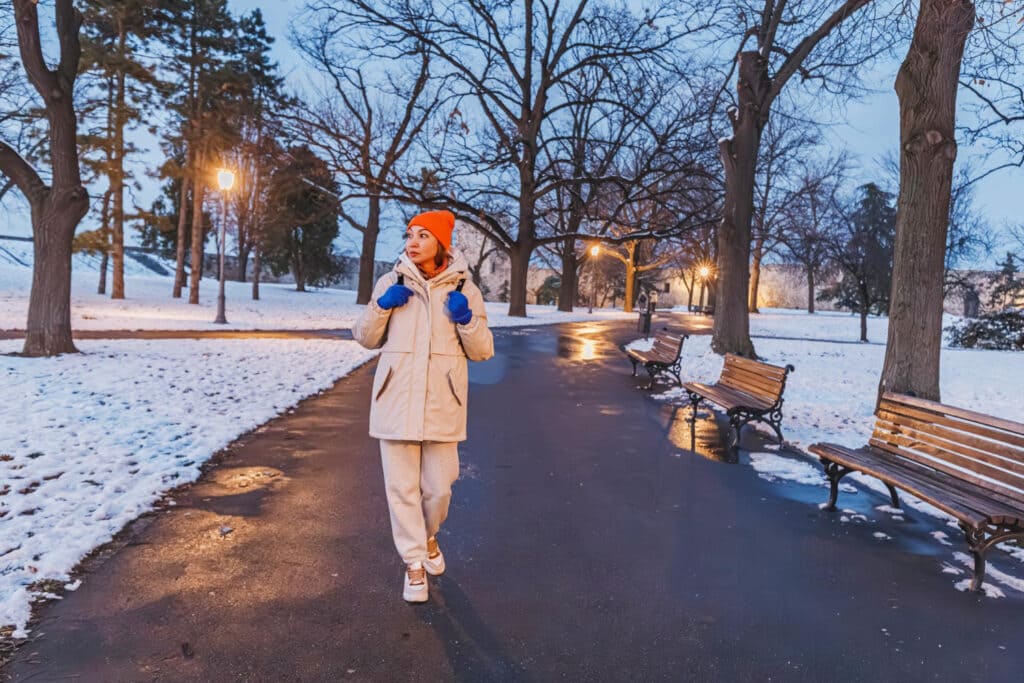
As the days grow shorter, more of us end up walking after dark after work, after dinner, or just to clear our heads. Those quiet walks can be the best part of the day, but darkness brings its own challenges. These practical, homeowner-friendly tips will help you stay visible, aware, and confident every time you step out for an evening stroll.
When the clocks fall back, it always sneaks up on you. One night you’re finishing dinner with a bit of daylight left; the next, you’re stepping out into darkness. The street feels different quieter, cooler, and full of small shadows.
For many people, that’s still the only time to fit in a walk. Maybe you’re out with the dog, running an errand, or unwinding before bed. Whatever the reason, walking at night can be peaceful until something startles you, or a car rounds a corner a little too fast.
According to the National Highway Traffic Safety Administration, nearly three-quarters of fatal pedestrian crashes happen after dark. Visibility drops, drivers get tired, and even familiar routes can hide hazards. But don’t worry. You can keep your nightly walk exactly as it should be safe, quiet, and relaxing with a few smart changes.
Why Night Walking Feels Riskier (and Is)
Darkness changes how everything looks and feels. Streetlights cast long shadows, headlights create glare, and colors blur into the pavement. Even gray or navy clothing that feels “neutral” during the day almost disappears at night.
Drivers are dealing with their own version of that challenge. After work, they’re tired, maybe distracted by traffic or their phones. Walkers are often doing the same thing scrolling, texting, or half-listening to music.
The Centers for Disease Control and Prevention reports that most pedestrian injuries occur between 6 p.m. and midnight, when visibility and alertness dip the most. Add in a cracked sidewalk or patch of ice, and the risk multiplies fast.
The fix isn’t complicated just awareness, light, and a little preparation.
How to Stay Visible When Walking at Night
Start with the basics: make yourself easy to see. Reflective gear isn’t just for runners it’s one of the simplest safety upgrades out there.
Swap dark clothes for light or fluorescent ones. Add reflective bands to your wrists or ankles, clip-on LEDs to your bag, or wear a small blinking light. Reflective material can make you visible from nearly 500 feet away when headlights hit it that’s enough time for a driver to see you clearly and react.
A small flashlight or headlamp helps you spot uneven pavement or puddles. If you’re walking a dog, give them a reflective leash or collar light too.
These little touches don’t just make you visible they make you unmistakable.
How to Choose a Safe Route
1. Pick the bright path. Stick to well-lit, familiar areas with sidewalks or marked crossings.
2. Skip shortcuts. Parks, alleys, and empty lots may save a few minutes but aren’t worth the risk.
3. Face oncoming traffic. On streets without sidewalks, it’s the only way to see what’s coming.
4. Share your plan. Use your phone to send your route or real-time location to someone you trust.
Apps like Google Maps can show which streets are better lit, while some phones even estimate walking times more accurately at night. A quick glance before heading out keeps your focus on the walk itself not what’s around the next corner.
Stay Alert, Not Anxious
Night walking shouldn’t feel tense. The goal is to stay aware without being on edge.
Keep the music low or use one earbud so you can hear your surroundings footsteps, a car door, the rustle of leaves nearby. Look up often, especially before crossing streets or driveways.
And when you do cross, make eye contact with drivers. A small nod or wave helps confirm they see you. Walk with purpose, not hurry; confidence itself signals awareness.
Put the phone away for most of the walk. One glance at a text can mean missing an uneven curb or a quiet car pulling out of a driveway.
Safety Tech and Smart Tools
A few smart tools can make night walks feel safer right away.
- Use your phone’s SOS features. Apple’s Emergency SOS and Android’s Safety settings can call for help and share your location automatically.
- Try safety apps. Apps like Life360 and Noonlight let loved ones track your route or check in if something feels off.
- Carry a small alarm. A keychain siren or whistle draws instant attention if you need help.
According to FEMA, personal safety devices are among the simplest, most effective deterrents available. Combine those tools with common sense: tell someone when you’re leaving and when you expect to be back.
Walking With Pets or Partners
Dogs make great walking companions, but they need to be seen too. Reflective leashes, collars, and LED tags help them stand out. Keep the leash short so they can’t wander into traffic or chase after wildlife.
If you’re walking with a friend, coordinate your visibility one wears bright clothing, the other carries a light. Together, you’ll stand out even more.
Dress for the Weather and Terrain
After sunset, the temperature can drop fast. Layer up with breathable, moisture-wicking fabrics that keep you warm but not sweaty. A lightweight jacket, gloves, and hat can make a big difference once the evening air cools.
Skip the all-black outfits unless they have reflective strips or panels. They might look sleek, but they’ll vanish under streetlights.
Wear shoes with grip. Wet leaves, frost, or smooth concrete can turn slippery fast. If your walkway tends to freeze overnight, sprinkle a little sand or non-clumping cat litter before heading out it’s old-school, but it works.
Community Lighting and Neighborhood Safety
Good lighting protects everyone. Report broken streetlights or dim corners to your local public works department most cities make it easy online.
If your area has a neighborhood watch program, join in or help start one. Walking in pairs or groups not only boosts safety but builds connection.
Some communities organize “Light the Night” events where residents check lighting and report issues before winter. It’s a small effort with a big payoff.
Trust Your Instincts
If something feels off, don’t brush it aside. Turn around, cross the street, or change direction.
Stick to routes you know, but vary them slightly now and then. If you ever feel followed, head toward light an open store, a house with porch lights on, or a main road. Call someone while walking or use a safety app if needed.
Preparation creates calm. When you already know what you’d do in an uncomfortable moment, your focus stays on enjoying the walk not worrying about it.
A Brighter Way to End the Day
There’s something special about walking at night the quiet, the glow of porch lights, the cool air after a long day. With a little foresight, you can keep that calm feeling intact.
Because the point isn’t just to get your steps in. It’s to finish your day feeling clear-headed, grounded, and home safe.
FAQs
1. What should I wear when walking at night?
Light-colored or reflective clothing helps you stand out. Add small LED lights or reflective bands for extra visibility.
2. Is walking alone at night safe?
Yes, if you plan ahead. Stick to well-lit routes, stay alert, and share your location with someone you trust.
3. Should I carry anything for safety?
A flashlight, your phone, and a small whistle or alarm are smart to have on hand.
4. What’s the best time to walk after dark?
Early evening, while the neighborhood is still active and some daylight remains.
5. How can I make my neighborhood safer for walkers?
Report broken lights, keep sidewalks clear, and encourage group walks or community lighting checks.