

Q: How can I make my child’s walk to the school bus safer?
A: Set a clear waiting spot at least ten feet back from the curb, pick predictable walking or biking routes with good sight lines, improve early-morning visibility with lights and reflective gear, and work with neighbors and your school to fix hazards.
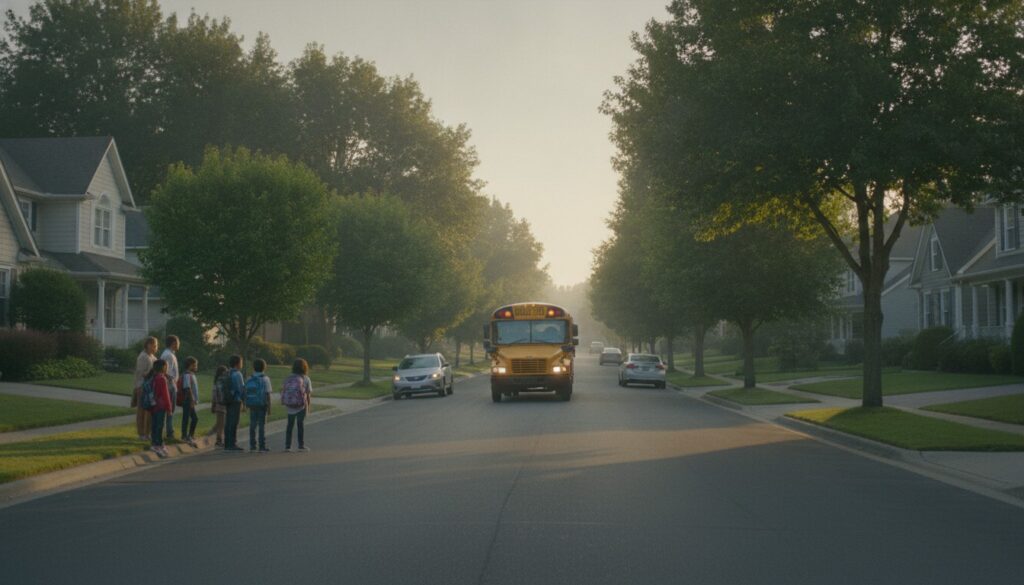
Picture a crisp August morning: backpacks zipped, thermoses snapped shut, headlights still on, and you on the porch watching your child wait at the curb while the bus idles a few houses down. Those shorter, dim mornings bring heavier traffic and groggy drivers, and what used to feel routine can suddenly demand timing and good sight lines. The National Highway Traffic Safety Administration reports that most student injuries happen outside the bus, in the space immediately around it, where visibility, driver behavior and route design collide.
A few deliberate moves, mapping safer routes, improving morning visibility, clarifying pickup rules and fixing small hazards on your property, turn a risk into a dependable routine. Think of this as a practical checklist you can use with neighbors and your school. Consistent habits, combined with targeted fixes, reduce risk. That’s something both studies and practitioners agree on.
Know the “danger zone”
When people say the “danger zone” around a stopped school bus, they mean the roughly ten-foot space around the vehicle where most injuries happen. That includes the front, back and sides, spots where a driver’s sight lines develop blind corners and a child’s sudden move, chasing a glove or stepping between cars, can disappear. Ten feet is about the length of a standard couch or three adult strides. It’s an easy boundary kids can learn.
Your yard and driveway are part of that picture. If a child drops a shoe and steps off the curb between your parked SUV and the bus, they can slip into a blind spot before anyone notices. Pick one waiting spot on the sidewalk and make it a house rule: wait at least ten feet back until the bus stops and the driver signals it is safe to approach. A painted line on the curb or a strip of reflective tape gives kids a clear visual cue. A five-minute role-play before school starts helps them practice pausing and making eye contact with the driver.
Plan walking routes using Safe Routes to School principles
Map routes like a Safe Routes to School advocate: choose direct paths with sidewalks or wide shoulders, clear crosswalks, low-traffic streets and strong crossing-guard coverage. The safest route is not always the shortest; a few extra minutes on a quiet side street is usually worth avoiding a busy artery. Local Safe Routes programs and university extension offices offer checklists and audit templates you can use to document hazards and suggest fixes to the school or public works department.
A walk audit is one of the most useful steps you can take. Walk the exact path your child will use at the time the bus stops. You will spot missing sidewalks, cracked pavement, mailboxes that jut into the path and shrubs that block sight lines. Photograph each issue, note the time and traffic conditions, and bring those observations to the school or city. Districts often partner with Safe Routes programs to fund crosswalks, curb ramps or traffic calming once needs are documented. Keep two backup routes, one for heavy traffic and one for bad weather, and share an illustrated map with caregivers and neighbors so everyone follows the same path.
If bike lanes are not available, favor low-speed streets and make sure helmeted riders use a steady white front light and a flashing red rear light. Those lights improve visibility far more than clothes alone and help drivers and the bus operator anticipate where children will be.
Visibility and timing strategies for early-school starts
Dim mornings change the safety picture, so visibility should be routine, not optional. Layer bright clothing with reflective vests or strips, blinking LED clip-on lights and bike lights for riders. A steady white front light and a flashing red rear light on a bicycle make a rider visible from much farther away than reflective clothing alone, and inexpensive clip-on blinkers are easy to keep in a grab-and-go kit.
Timing matters as much as gear. Aim to arrive at the stop five minutes early so kids are not rushing across driveways in low light, and stagger departures at home so no one has to race to the curb. A motion-activated porch or walk light that hits the waiting area helps drivers pick out small figures and signals to the bus operator that children are present. CDC guidance and Safe Routes programs show that combining visibility measures with arriving early reduces hurried crossings and improves safety.
Keep a visibility kit by the door, vest, clip light, hat with reflective trim, so blinkers do not get left in backpacks. Check batteries regularly and replace them before the busy months begin. Teach children to stand well back from the curb until the bus stops and the driver gives a signal; in poor light, that extra distance is a real buffer.
Who’s responsible at the curb
School districts handle pickup and release in different ways, and knowing your school’s rules removes confusion at the curb. Many districts require an authorized adult to meet kindergarten and younger students, while older kids may be released to the curb. Keep your authorized-pickup list current, because drivers will not release a child to someone who is not listed. Those rules exist to prevent misidentification and reduce abduction risk.
Respecting the bus driver’s authority keeps loading and unloading orderly. When parents and drivers agree on a waiting spot, follow the driver’s signals and keep the stop predictable, loading times shrink and unpredictable movement drops. Put special pickup arrangements in writing with the school and brief babysitters and relatives before their first morning. Many districts offer laminated ID cards or stop-assignment sheets that help temporary caregivers follow the procedure.
Practical household moves cut confusion: post a laminated copy of pickup procedures in a visible place, brief caregivers before their first day, and carry a photocopy of the authorized list in a wallet or on a phone. Most districts allow online updates or same-day phone additions with ID verification.
Clear sight lines, maintain sidewalks, and prepare for seasonal hazards
Your yard and driveway are part of the school-trip ecosystem, so small property fixes pay big dividends. Trim hedges and low branches back 6 to 8 inches from the sidewalk edge and pull parked cars fully into driveways so children are not hidden from passing drivers. Repair broken pavement and remove toys and bikes from sidewalks; a child tripping and moving unpredictably into the street is one of the simplest hazards to prevent.
Seasonal maintenance matters more than you expect. Sweep wet leaves in the fall, because leaf litter hides curbs and becomes slippery. Clear snow and ice in winter so the bus can pull close and kids can step onto a solid surface. After summer storms, check for downed branches and displaced trash cans that could block sight lines or force children into the roadway. Reflective stakes or temporary paint markers are low-cost ways to flag low-visibility edges in winter.
Also check electrical and moisture issues around your porch and walkways. Make sure outdoor lighting is on GFCI-protected circuits and bulbs are rated for outdoor use. Remove standing water that leads to icy patches and invites pests, and keep mulch and woodpiles away from walkways to reduce pest harborage and fire risk. Your local extension office or public works page offers specific guidance for de-icing, sidewalk repair and seasonal pest prevention.
Adopt a simple seasonal checklist: trim growth, mark low edges for winter visibility, repair sidewalk defects and coordinate clearing duties with neighbors so no single household is overwhelmed. When sight lines are open and sidewalks are predictable, drivers see small figures sooner and children move with more confidence.
Turning individual steps into community change
Safety scales when you bring neighbors and the school into the conversation. Start a neighborhood group to share route maps, report hazards and organize adult coverage on bad-weather days. A few parents taking turns to watch a busy intersection or escort younger children after a downpour calms anxious nerves, and volunteer roles often lead to longer-term infrastructure fixes when issues are documented.
Take your walk audit findings and photos to the school, PTA and public works department. A concise, photographed report helps officials prioritize crosswalks, curb extensions, repainting and improved lighting. Many Safe Routes to School programs fund engineering, education and enforcement interventions once local needs are shown, and parent-led audits are often the starting point for funding.
Organize practical events like a Back-to-School Safety Night where you hand out reflectors, explain route maps and collect emergency contact cards for kids who use your stop. Request a temporary traffic study if a street feels unsafe, and keep a simple log of reports and replies so your neighborhood can track progress. When household habits, neighborhood organization and school partnership come together, the morning trip to the bus stops feeling like a daily gamble and becomes a coordinated routine.