

Q: How can older adults garden safely through changing seasons?
A: With a few practical adjustments you can garden more comfortably and reduce common risks: clear, predictable paths; raised beds and ergonomic tools; timed sun, heat, and pest protections; and simple storm and fire habits you build into a routine.
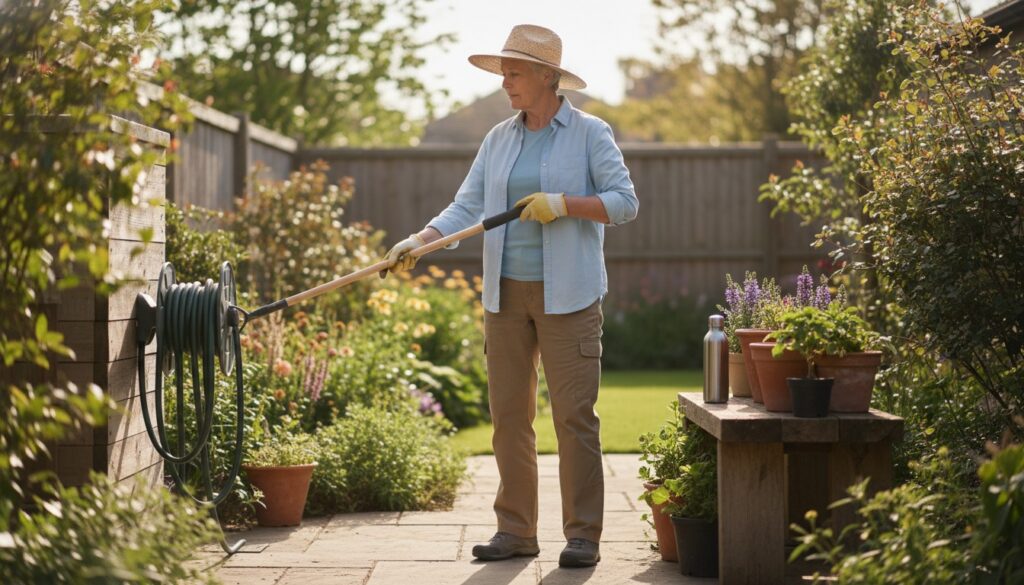
Table of Contents
- Introduction
- Make your garden fall-safe: Identify and remove trip and slip hazards
- Reduce strains: Raised beds, seating, and ergonomic tools that work for your body
- Guard against sun, heat, and dehydration, and know when to get checked for skin cancer
- Weather, storms, and fire-safety basics for outdoor spaces
- Pest control, bite prevention, and home and family safety in the garden
Introduction
Picture a crisp morning in your garden: damp earth under your boots, soft dawn light on the hydrangeas, and your mug leaving a warm ring on the potting bench. Now picture stepping over a coiled hose you did not see, or finishing a long afternoon bent double with a sore back and a lobster-red neck from too much sun. Gardening is one of the healthiest hobbies there is, fresh air, gentle movement, the quiet satisfaction of coaxing life from soil, but for older adults the seasons bring hazards that are easy to underestimate.
Small, targeted changes to your yard and routine make a big difference. Falls, muscle strains, dehydration, and cumulative sun exposure are more than inconveniences; they are common, preventable problems. CDC says about one in four older adults falls each year, and falls are the leading cause of fatal and nonfatal injuries among older Americans. When summer sun switches to slick autumn leaves or a sudden spring storm rolls in, ordinary paths and tasks suddenly look different. Safety is an annual rhythm, not a one-time fix.
Below are practical habits and modest upgrades that help you garden through every season: spot and fix trip hazards, cut down on bending with raised beds and ergonomic tools, protect yourself from sun and heat and know when to see a clinician, and prepare your yard for storms, fire, and pests without turning the garden into a battleground. You do not need a major remodel, just smart choices, a few tools, and a simple routine that keeps you tending plants well into your golden years.
Make your garden fall-safe: Identify and remove trip and slip hazards
You probably walk the same path to the compost pile every day without thinking about it. That familiarity is comforting, and it can also be misleading. Do a slow weekly walk-through before you start work and look for puddled leaves, loose edging, uneven pavers, and hoses that have migrated into walkways. The CDC’s fall-prevention checklist emphasizes clear, predictable routes and stable handholds, and those are easy fixes when you catch problems early.
Keep paths at least 36 inches wide so you can carry a watering can or wheelbarrow without brushing vegetation or catching a toe. If a step-down or lip is more than about 1 inch, add a low-profile ramp or re-level the pavers to avoid an unexpected drop. Where dew, irrigation, or runoff makes surfaces slippery, consider textured pavers or non-slip matting, and add motion-activated pathway lighting so early-morning and dusk work is no longer a guessing game.
Small changes add up. Coil hoses on a reel, route hoses under raised beds, or install retractable guides so a single misstep does not turn into a fall. Put a grab rail where you pause to pot plants, anchor loose edging with landscape spikes so it stays put through freeze and thaw, and tuck tripping hazards out of sight. FEMA and local extension offices note that predictable routes and good lighting measurably reduce fall risk, and these fixes usually pay off quickly.
Reduce strains: Raised beds, seating, and ergonomic tools that work for your body
If bending, stooping, or reaching leaves your back and knees aching the next day, change your work height and tool choices instead of relying on sheer determination. Extension offices and landscape ergonomists recommend raised beds about 24 to 30 inches high or table-top planters so you can garden while standing or sitting. Beds about elbow height cut stress on hips and the lower back. Keep bed widths to roughly 2 to 4 feet so you can reach the middle from either side without twisting.
Create a set-up you use every time you work. Keep a sturdy, cushioned stool or bench close by, place a small tool caddy within about 18 inches, and use a shallow tray to catch soil. Choose long-handled tools for tasks that used to make you stoop, and pick tools that feel light and balanced. Aim for hand tools under 1 to 2 pounds when you use them repeatedly. For repetitive digging, a battery-powered cultivator reduces strain, though follow extension recommendations for safe use.
When a task still requires kneeling, use a thick knee pad or a garden kneeler with handles to protect your joints and give you use to stand without pulling muscles. For planting bulbs, try a sit-down planter bench or a grabber to place bulbs into prepared holes so you do not stoop for every single one. Work smarter, not harder. You will notice less soreness and more of the pleasure that keeps you coming back.
Guard against sun, heat, and dehydration, and know when to get checked for skin cancer
There is nothing like a cool morning sun on your face, but those hours add up. The American Academy of Dermatology says one in five Americans will develop skin cancer in their lifetime, so timing and protection matter. Plan yard work for cooler windows, usually before 10 a.m. or after 4 p.m. when the UV index is lower. Wear a wide-brim hat, UPF-rated clothing, and SPF 30 or higher sunscreen applied 15 to 30 minutes before going outside, and reapply every two hours or after sweating. Sunglasses that block UV protect both skin and vision.
Hydration is a stealthy risk because thirst signals change with age. You are less likely to feel thirsty even when your body needs fluids. Make drinking part of your gardening routine: limit sessions to 20 to 30 minutes with a 10-minute break inside, and keep an insulated bottle nearby so water is always handy. When temperatures climb above about 85 degrees Fahrenheit, avoid sustained outdoor work and watch for early signs of heat illness such as dizziness, weakness, or confusion, especially if you take medications that affect fluid balance. CDC and EPA guidance highlight how environment and medications affect heat risk, and NOAA weather alerts help you pick safer gardening windows.
Do a monthly self-check for new or changing moles and schedule an annual exam with your primary care doctor or a dermatologist, especially if you have many sunspots or a history of sunburn. Local clinics and senior centers often host skin-screening events. If a spot looks asymmetric, grows quickly, itches, or bleeds, get it checked. Many gardeners keep simple photo records and bring images to appointments; it makes documenting change easier.
Weather, storms, and fire-safety basics for outdoor spaces
A calm backyard can become chaotic after a windstorm: toppled pots, a trellis in the grass, a table that slid into a flower bed. FEMA recommends securing loose items before storms so they do not become dangerous projectiles. Make anchoring pots, tying down trellises, and moving lightweight furniture indoors part of your storm checklist when high winds or severe weather are forecast. Taking a few minutes to secure things and checking NOAA watches before a storm can save money and reduce injury risk.
Fire safety in the yard is mostly common sense about spacing and storage. The National Fire Protection Association and local fire departments recommend keeping grills and open burners at least 10 feet from buildings and maintaining a clear zone around portable heaters. Store fuels and propane tanks upright in a dry, ventilated shed away from windows and living spaces, and keep a garden hose or a rated extinguisher within reach when you use open flames or heavy electrical tools. Many StaySafe.org readers keep a ready hose and report faster response times during small flare-ups.
Put together a compact storm kit near the back door: bungee cords, a tarp, heavy-duty zip ties, basic hand tools, and a lightweight cover for potting soil and sensitive plants. After storms, inspect for erosion, pooled water, and shifted pavers, and re-level paths right away to prevent new trip hazards from settling in. A few routine checks before and after bad weather keep the garden safer and much easier to manage.
Pest control, bite prevention, and home and family safety in the garden
A clogged rain barrel or forgotten saucer can turn the garden into a mosquito nursery. Follow EPA guidance on standing water: toss containers that hold water, tip saucers, and screen rain barrels. Use integrated pest management, remove habitat, keep borders tidy, and use targeted, low-toxicity controls recommended by extension services, so you reduce pests without harming pollinators or people. Clearing brush and rock piles cuts hiding places for ticks and rodents, and regular mowing shrinks the territory where they can lurk.
When you work in tall grass or brush, personal protection is highly effective. Wear long sleeves, tuck pants into socks, and choose light-colored clothing so ticks are easier to spot. EPA-registered repellents applied per label directions protect against mosquitoes, and permethrin-treated clothing is an option for longer outings or heavy tick country. If you find a tick, prompt removal within 24 hours greatly reduces the chance of disease. Your county extension or health department can advise on testing and symptoms to watch for.
Family safety matters as much as pest control. Let a family member or neighbor know when you will be working and for how long, keep a charged cell phone or a medical alert device nearby, and store sharp tools in a locked shed to prevent accidents and theft. Seal gaps in fences and gates to deter wildlife and opportunistic intruders, and check local extension resources for safe, low-toxicity pest options and trapping guidance. A quick call to a neighbor telling them where you will be working often speeds help when it is needed.
A little planning, a handful of changes, and a few good habits keep the garden a place of pleasure rather than risk. Gardening should feel restorative. With these practical steps you can keep tending plants safely through every season.